Watch the talk
10 minutes, with an English voice-over
Read the transcript
0:00 · Writing on Facebook is building a castle on sand
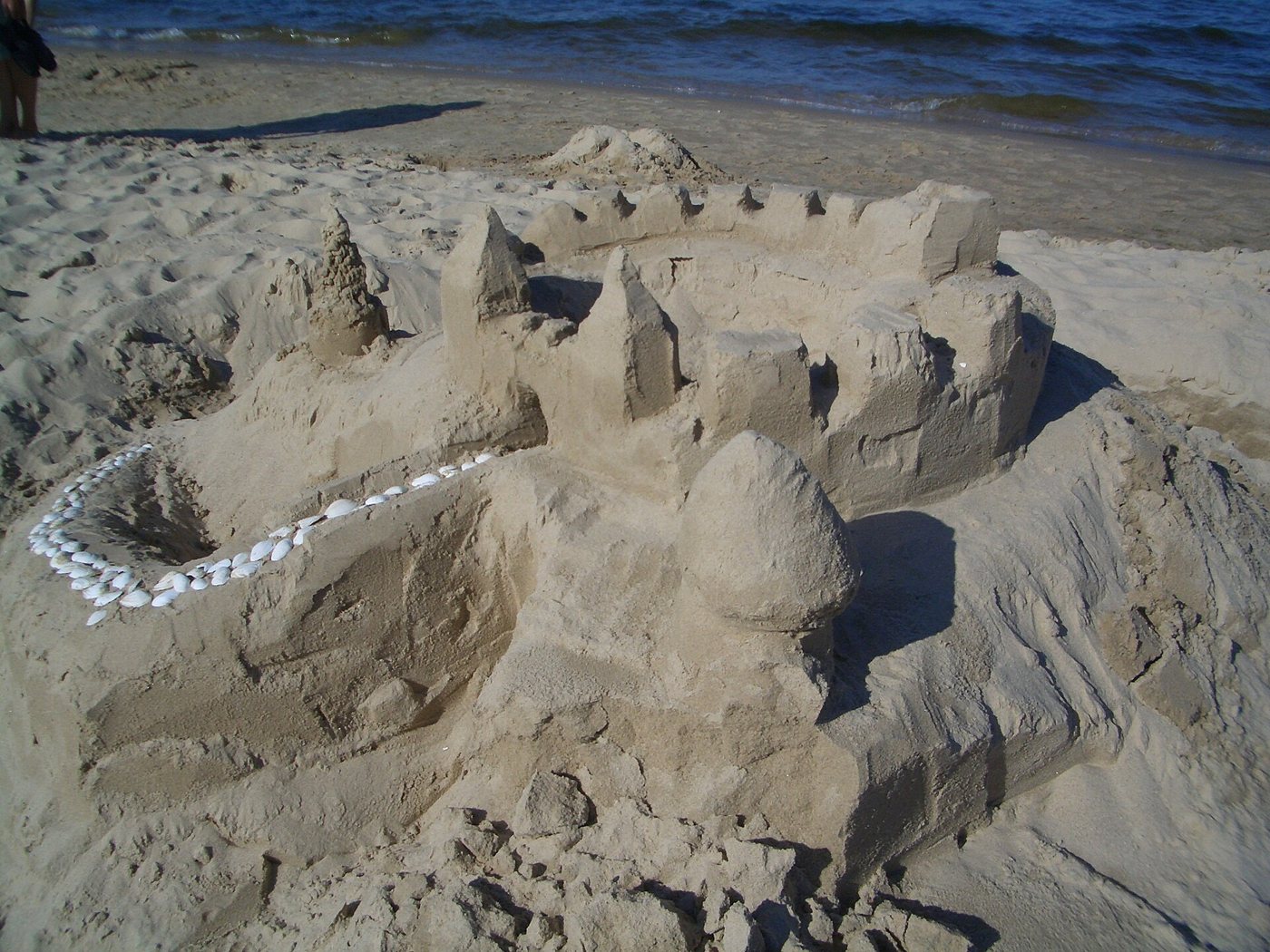
When we write on Facebook, we are building a castle on sand. A castle on sand has no base. It cannot be built up, it has no foundations. Just now I was talking to a woman who has a group. She writes posts and shares a great deal online. I told her that posting those pieces on Facebook is a real waste. Rather than explain it to her alone, I am making this video so everyone understands why we should do this. If you write a lot, publish, have many followers, and write in depth, you especially should watch this and do it.
0:49 · Facebook is the market, and you only have a stall
Why? Because in the end Facebook is just a market we go to, where we have a stall. The stall is your account, your page or your group. The rules of the game are set by Facebook. Today Facebook feels your content is good and wants to push it, so the algorithm pushes it. Tomorrow it does not want to, it changes the algorithm, and you are no longer distributed. Ask around, or you have surely come across it yourself: everything is normal, and suddenly the account is gone. If you have been writing for five, seven, ten years and lose the account, it is all gone. Nothing is left. So what should we do?
1:40 · Put your writing on a website
Put those posts on a website straight away. Images, articles, video: put them on a website. How is a website different? Notice that when you type Facebook into the address bar, that is an address, and your page is a subdirectory of it. You are on someone else's land. A page of your own is your personal website. Put simply, Facebook sits on a server. Your posts and your account all sit in a computer at Facebook's headquarters, and Facebook controls it. With a website, you keep it on your own server, and you control it. People reach your server through a domain name, so you buy a domain name.
2:37 · Why the earlier you register a domain, the better
Why do I say do this as early as possible? When Google scans domains to find the best search results, it looks at several levels. One is whether the writing is good, of course. Another is how long the domain has existed and how active it has been. A domain created today with a thousand posts uploaded will not have the same trust as a domain that has posted one piece a week, every week, for years. So if we start now, put up a domain and place our writing there first, it starts building a history from today. In six months or a year we suddenly have a history, and that is what counts.
3:35 · ChatGPT cannot find you on Facebook
Another point: people now look for information on ChatGPT a great deal. Those of you who are experts in a field have a lot of knowledge to share. When someone asks ChatGPT whether there is an expert or anyone working in this field, ChatGPT goes and scans different websites to see who talks about the subject and who has knowledge of it. If you have written a thousand posts and left them on Facebook, they are lost. It cannot scan them. Why? Facebook blocks ChatGPT. It is simply a conflict of interest. ChatGPT sells advertising, and Facebook sells advertising. They are media companies that are very strong in technology. ChatGPT has launched ads. So Facebook and Instagram do not want their users going over to ChatGPT too much, and they do not allow scanning. Or they allow it today and stop tomorrow. So through ChatGPT, people will not find you if you are only on Facebook.
5:05 · A website is your own shopfront
But a simple website, like a sheet of paper or a brochure, can be found. Imagine many buildings. You take your poster and stick it up inside the Facebook building. The Google Maps car driving past cannot scan it, because it is indoors and the car cannot drive inside. Some cars get in, some do not. But if you have your own website, it is like having a whole shopfront of your own. You put whatever information you want on it. You can even make it a showroom. So you have to put it on the web.
5:44 · Keep writing on Facebook, but lead readers to your website
This does not mean you stop writing on Facebook. She told me she sees that people do not click. At first they do not, of course. But there are ways to get them to click. For example, you write ten pieces and post only three on Facebook, then write 'continue reading here'. People click through to read on. Once they have been there and are used to it, and drop in now and then, it gets easier. On Facebook people join many groups, and it depends entirely on the algorithm what shows first. But if people remember a domain name, say thinguyen.com, thielts.com or thiacca.com, that is a short name that is easy to remember. A group called 'English learners' association' is one of countless groups with that name on Facebook, and when people look for it again they cannot find it. In marketing terms, you lose on awareness and on branding.
7:00 · Two things to do now
If you have a large archive of writing online, first save it. You could lose Facebook tomorrow without warning. Second, publish it on a platform of your own. On your own platform any content is fine. No need to disguise keywords or hide banned words. You write freely there. Facebook is only a market stall. In the past a website cost a lot of money, so not doing it made sense. You had to hire someone to copy, paste and retype everything. Today you can use a tool such as Apify, or Claude, or AI, to pull your information back down. You can even use Facebook's export data feature. If anyone needs a guide, comment and I will explain more. This is very important. If you do this, you gain a lot of independence. This is your digital asset.
8:22 · The land is still wide and empty
It is November 2026 as I record this, and the land is still wide and sparsely settled. On websites there are still few people. Most are still gathered on Facebook. But gradually more people will buy domain names. The good names, the names you like, will all be taken. Servers will get more expensive too. And Google will look at which domains have a history. So start now. Do not wait until the land is crowded, like Saigon today, where buying a home is very hard. The people who bought homes in Saigon in the 1990s and around 2000, when the property market had just opened, are all wealthy now. Do not wait until then to say 'if only I had known this back then'.
9:15 · Sign-off
Thi Nguyen has told you, Chartena has told you. Listen to Chartena, you will not lose by it. Do it now. I wish you success. If you run an independent business, a small business or a start-up, get in touch and I will show you which technology fits, what you need, to speed up your work, automate the inside and market on the outside. I am Thi Nguyen from Chartena. Goodbye, everyone.
We recently spoke with a woman who runs a Facebook group. She writes a great deal, shares generously, and has a large following. We told her one thing: leaving those posts on Facebook alone is a waste.
Writing on Facebook is building a castle on sand. The castle may be beautiful, but it has no foundations.
Facebook is the market, and you only have a stall
Facebook is a market. Your account, page or group is one stall inside it. The market owner sets the rules.
Today the algorithm decides your content is good and pushes it. Tomorrow the algorithm changes and your posts stop being distributed. There is nothing you can do about it.
Worse, you have probably heard this story: everything is fine, then one day the account is gone. If you have written for five, seven or ten years and lose the account, you lose all of it.

How is a website different?
A post on Facebook lives on Facebook's servers. Facebook controls it.
A post on your website lives on your server, under your domain name. You control it. You can write freely there, with no need to disguise keywords or avoid banned words.
Picture it this way. Posting on Facebook is like pinning your poster up inside someone else's building. Google's car drives past on the street and cannot get inside to photograph it. Having your own website is like owning a whole shopfront. You can display whatever you like, or even open a showroom.

Why sooner is better
When Google ranks search results, it does not only judge the quality of the writing. It also looks at how long the domain has existed and how steadily it has been active.
A domain registered today with a thousand posts uploaded at once cannot carry the same trust as a domain that has published one post a week for years. A domain's history cannot be bought. It can only be built up.
So if you put your writing on your own domain today, its history starts today. In six months or a year, you have a foundation.
ChatGPT cannot find you on Facebook
More and more people look for information through ChatGPT. They ask: is there an expert in this field? ChatGPT reads websites to see who talks about the subject and who knows it well.
If your thousand posts are on Facebook, ChatGPT cannot read them. Facebook and Instagram restrict AI tools from collecting their content, because these platforms live on advertising and do not want their users leaving for somewhere else.
A simple website, no more than a brochure, is enough for search engines and AI to find you.
This does not mean leaving Facebook
Keep writing on Facebook. The market is still where the crowd is.
Many people worry that readers will not click a link. At first, they will not. There is a simple way round it: if you write ten pieces, post three on Facebook, and end each with "continue reading here" and a link to your website. Once readers know the way, they come back on their own.
A short, memorable domain also helps your brand. Facebook has countless groups with near-identical names, and a reader who wants to find you again often cannot.
Two things to do now
- Save all your writing to your own computer. Facebook lets you export your data. You can lose the account at any time, so save it first.
- Republish it on a platform you own. Building a website used to cost a lot, and someone had to retype every post. Today AI and data collection tools do that work very quickly.
The land is still wide and empty
In November 2026, most people are still gathered on Facebook. On the open web, the land is still wide and few people have settled.
That will change. The good domain names will be taken. Server costs will rise. Google will favour the domains that already have a history.
The people who bought homes in Saigon in the 1990s, when the market had just opened, are all comfortable today. Do not be the one saying "if only I had known" a few years from now.

Do you have an archive of writing on Facebook that you want to bring home? Talk to us.